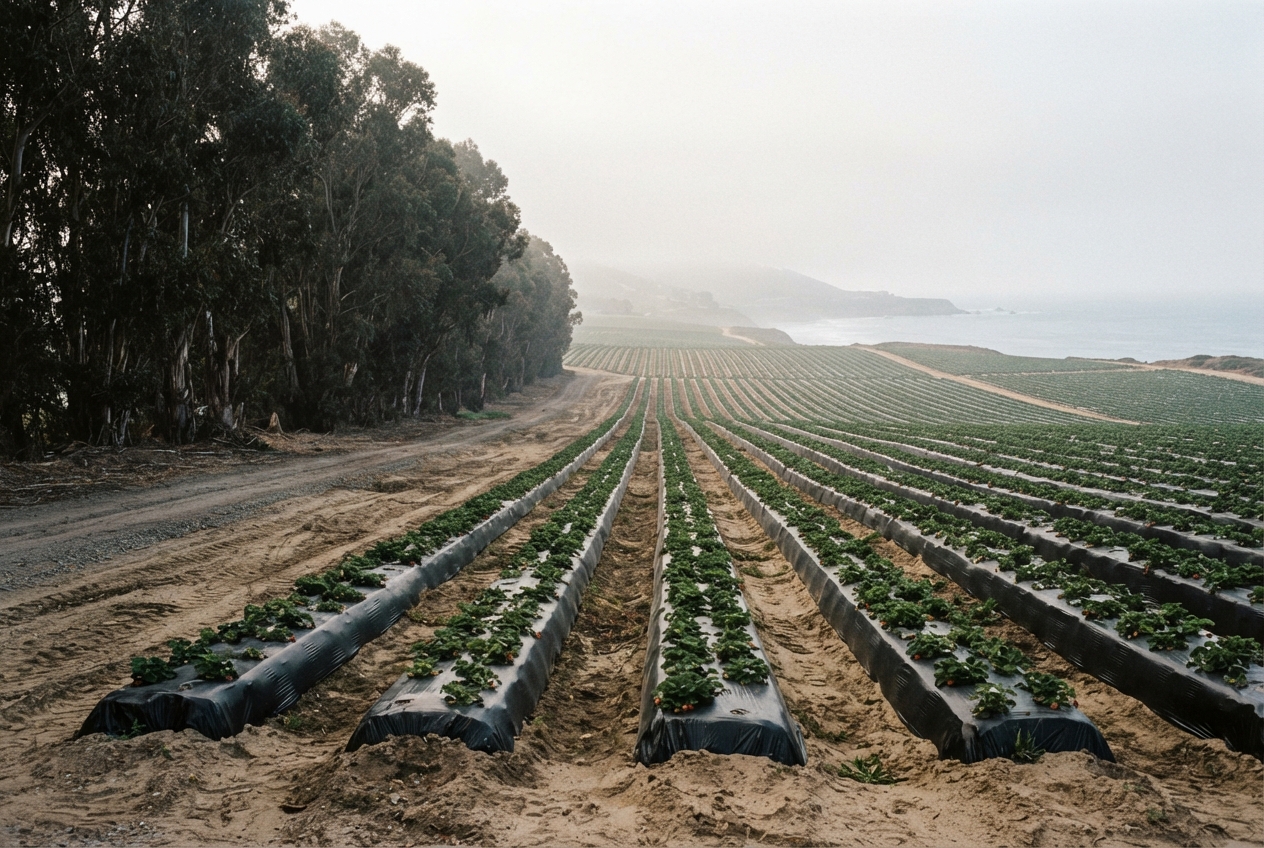
Drive up out of the valley onto the Nipomo Mesa and the ground changes under you. The soil is sand, deep and pale, blown in from the coast over thousands of years and settled into a plateau that stands nearly four hundred feet above the sea. Left alone it grows scrub and oak; planted, it grows strawberries.
The farms came with the railroad. Once there was a station in the valley, growers around Nipomo tried one crop after another and shipped whatever paid. The work was done first by immigrants from Europe and China and, by the turn of the century, mostly by Japanese families, who farmed the mesa until the war took them away. The long rows of blue gum eucalyptus that stripe the mesa were planted then as windbreaks, and they have outlasted most of the people who planted them.
On a summer morning the fog sits on the fields until ten, the eucalyptus drips, and the rows run off under plastic toward the sea. It is a working landscape, and the reason the valley below still has a name on the map.