Some decades ago someone in Nipomo picked up a stone spear point and kept it. When archaeologists finally examined it they found a fluted point of Monterey chert, with the long channel flakes up each face and the ground basal edges that mark the Paleoindian tradition, the same technology that Clovis hunters carried across the continent at the end of the last ice age. It is one of very few such points known from the Central Coast.
It is not the only sign of that antiquity close to home. In the Edna Valley, a short way north, the Cross Creek site has been dated to between roughly 8350 and 7700 BC, the oldest mainland shell midden on the west coast of North America. What its people left behind were not hunting weapons but handstones and milling slabs: they were grinding seeds and gathering shellfish, living a settled, gathering life on a coast that then lay miles farther west than it does now.
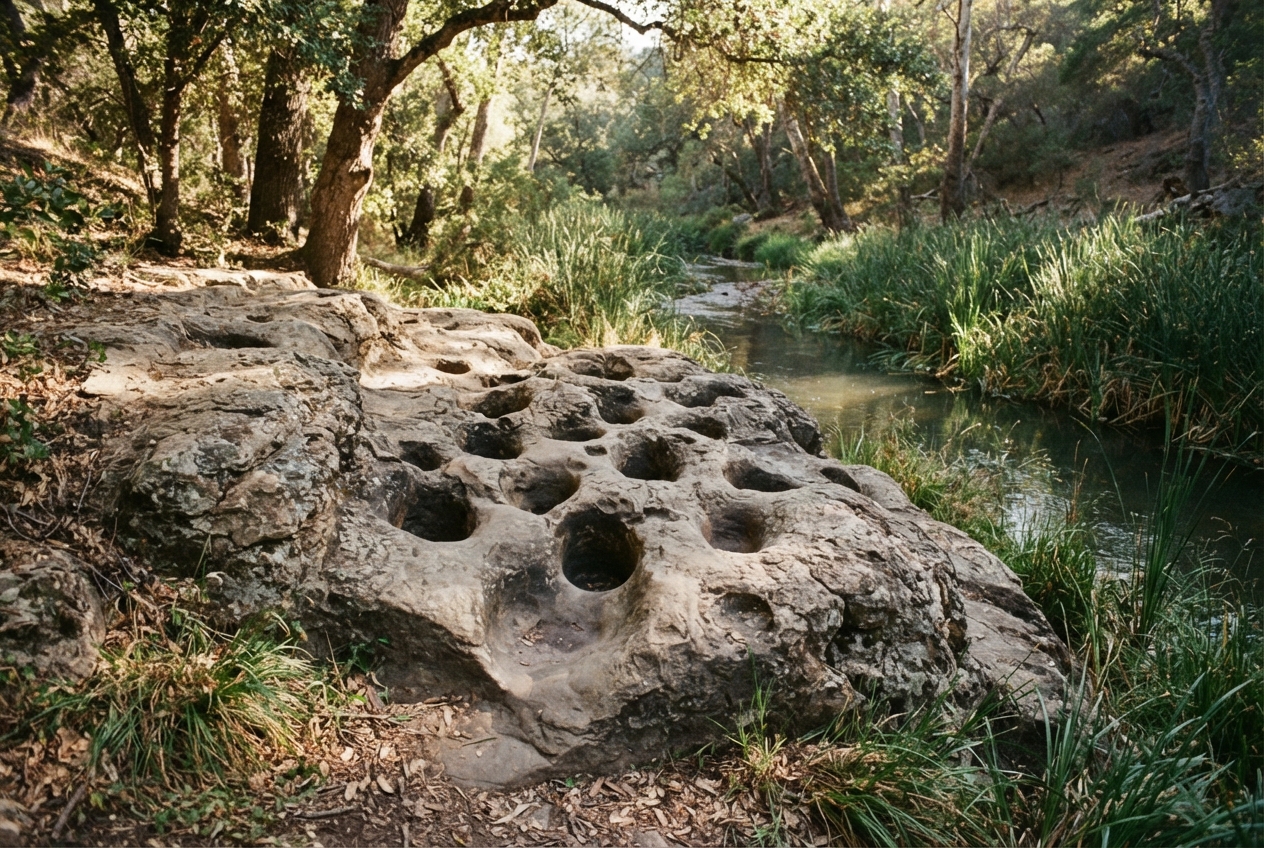
Bedrock mortars like the ones in the picture are the later, more visible version of that same idea: a rock by a creek, under oaks, where acorns were pounded into meal, season after season, until the stone itself remembered. The valley has been somebody’s home for a very long time.