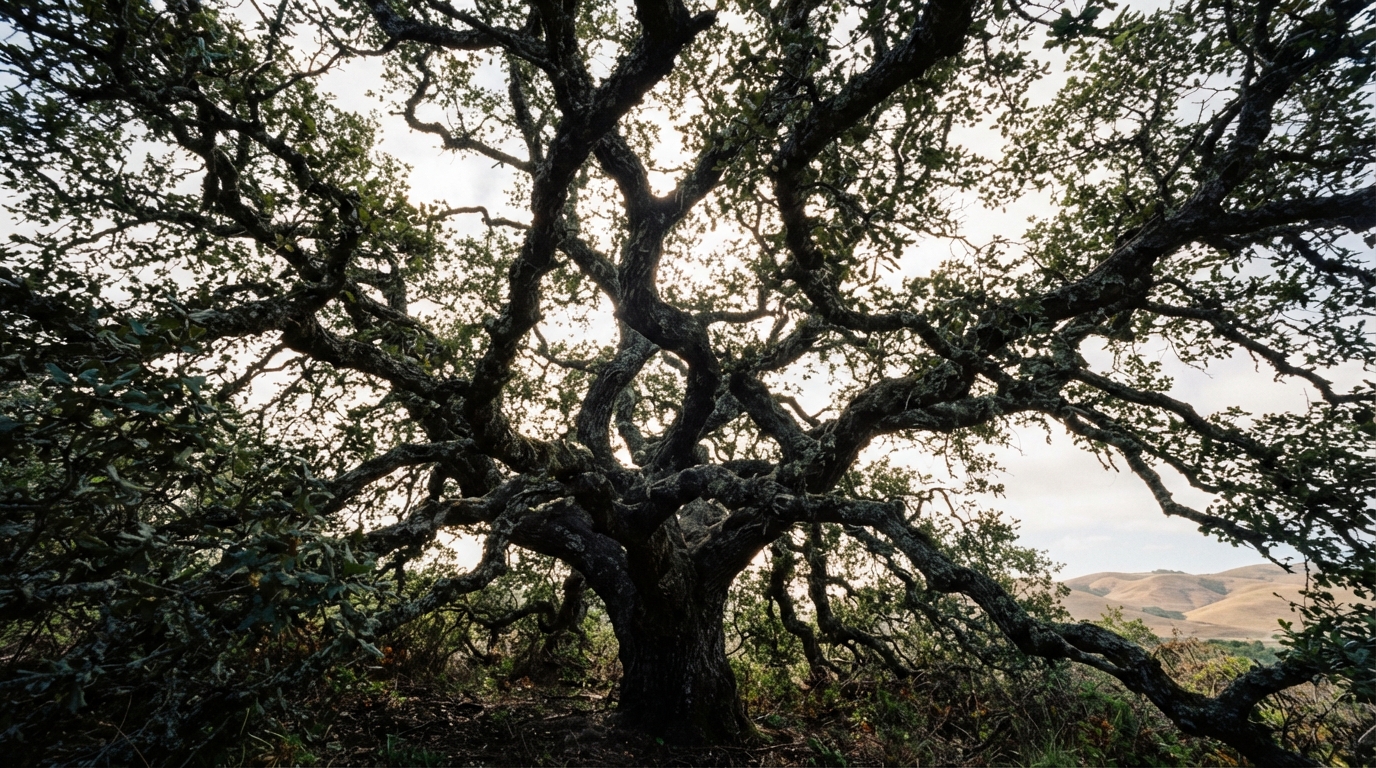
Los Berros is a valley that runs down out of the hills toward the sea. Everything about it, from the watercress to the strawberries, follows from how the water moves through it.
The creek
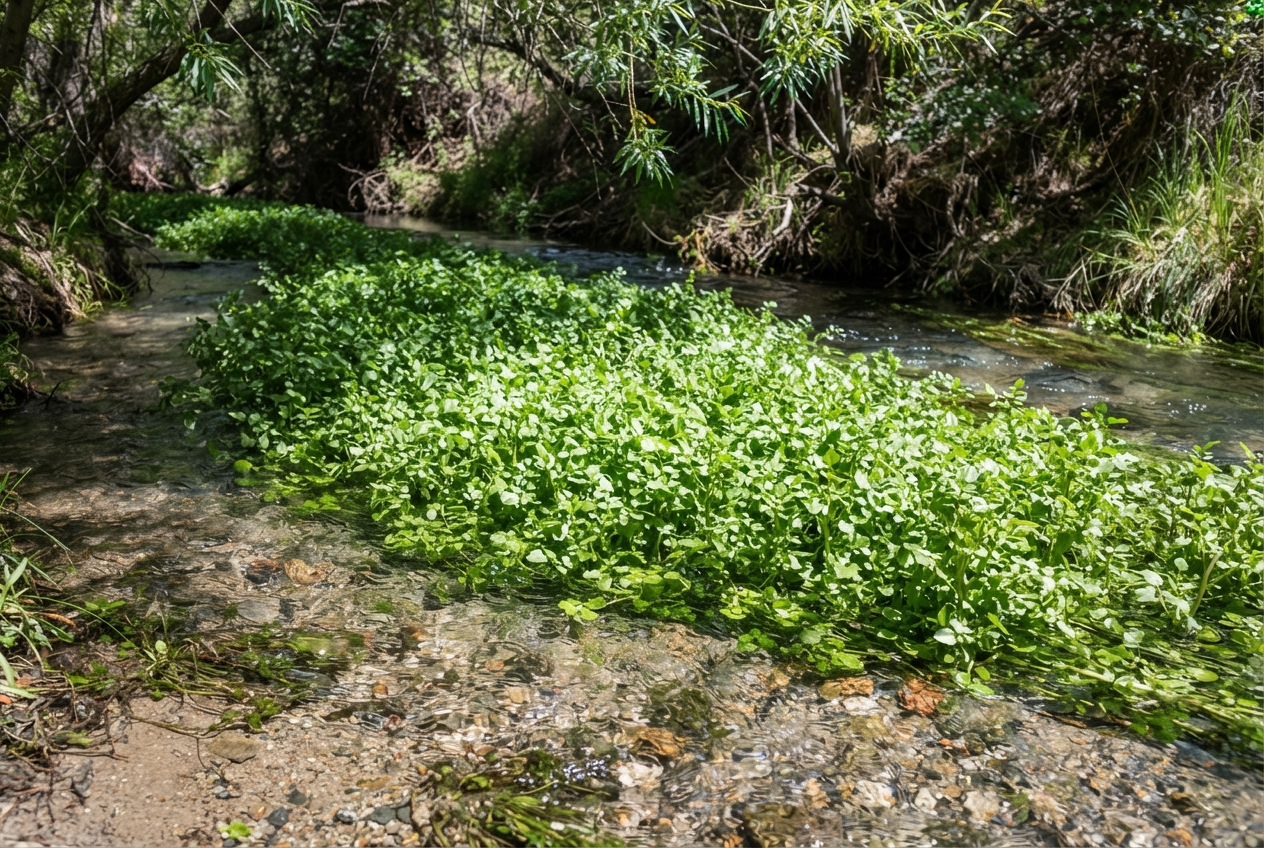
Los Berros Creek rises in the ridges to the east, in the country the county maps call Upper Los Berros Canyon and Temettate Ridge, and comes down past the hamlet on its way toward Arroyo Grande Creek and the Pacific at Oceano. It is a small stream with big moods: a trickle over gravel in September, a brown torrent after a January storm. The United States Geological Survey keeps a gauge on it near Nipomo. Where the flow is steady and the water clean, watercress grows in thick green mats, the plant that gave the creek, and then the valley, its name.
Hills and oaks
The valley sides are grassland and oak savanna: coast live oaks standing alone in gold grass in summer, green after the rains, with willow and sycamore along the creek and denser oak woodland in the side canyons. The hamlet itself sits at 194 feet above sea level on about two and a half square miles of valley floor. The hills to the east climb toward the Santa Lucia Range; to the west the ground rises onto the mesa.
The mesa and the dunes
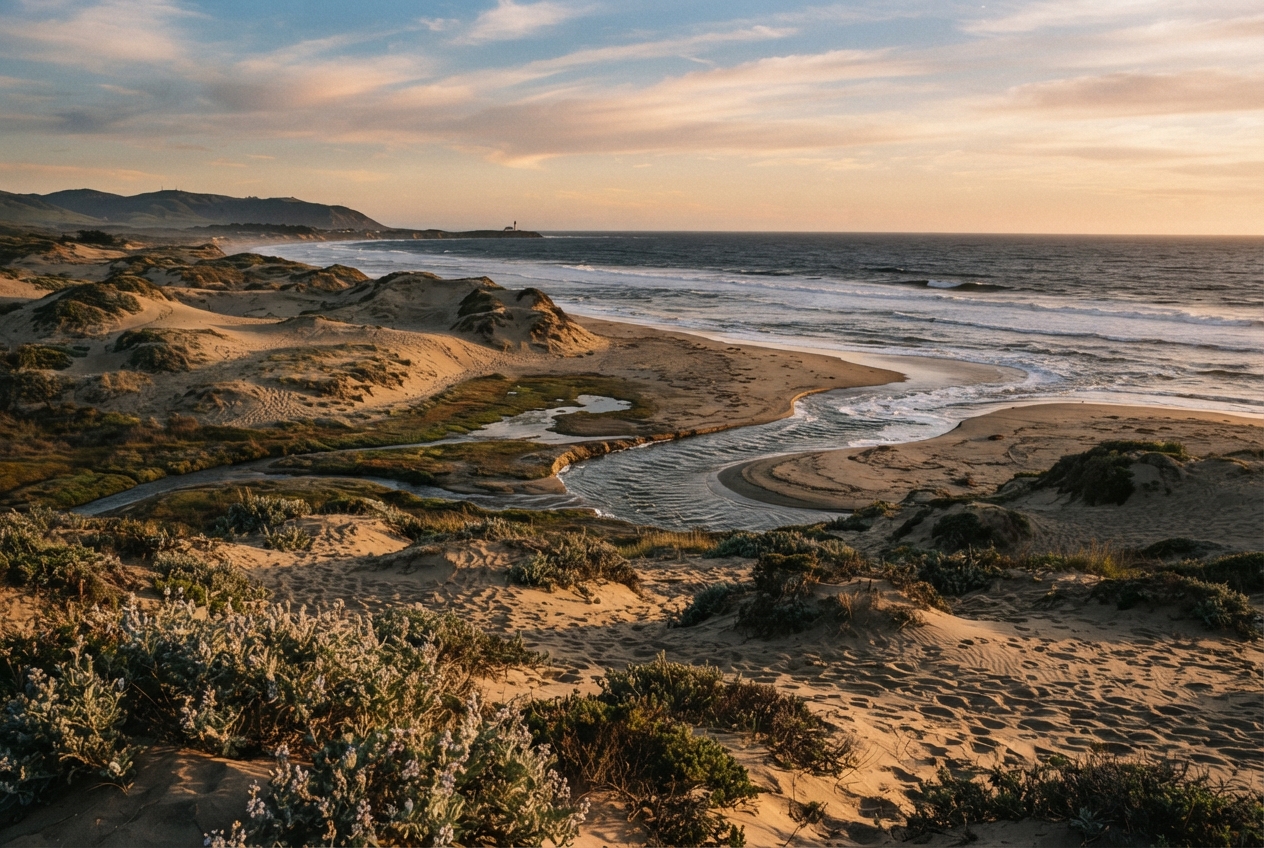
The Nipomo Mesa, whose high point stands at 381 feet a short way from Los Berros, is old dune sand: wind-blown from the coast and settled into a plateau over thousands of years, then anchored by scrub and, more recently, by rows of eucalyptus planted as windbreaks. Its sandy soil drains fast and warms early, which is why it grows strawberries and vegetables so well. Below the mesa the living dunes of Oceano and Guadalupe still move with the wind, the same sand system that has been building and shifting since the shoreline sat miles farther out at the end of the ice age.
Stone
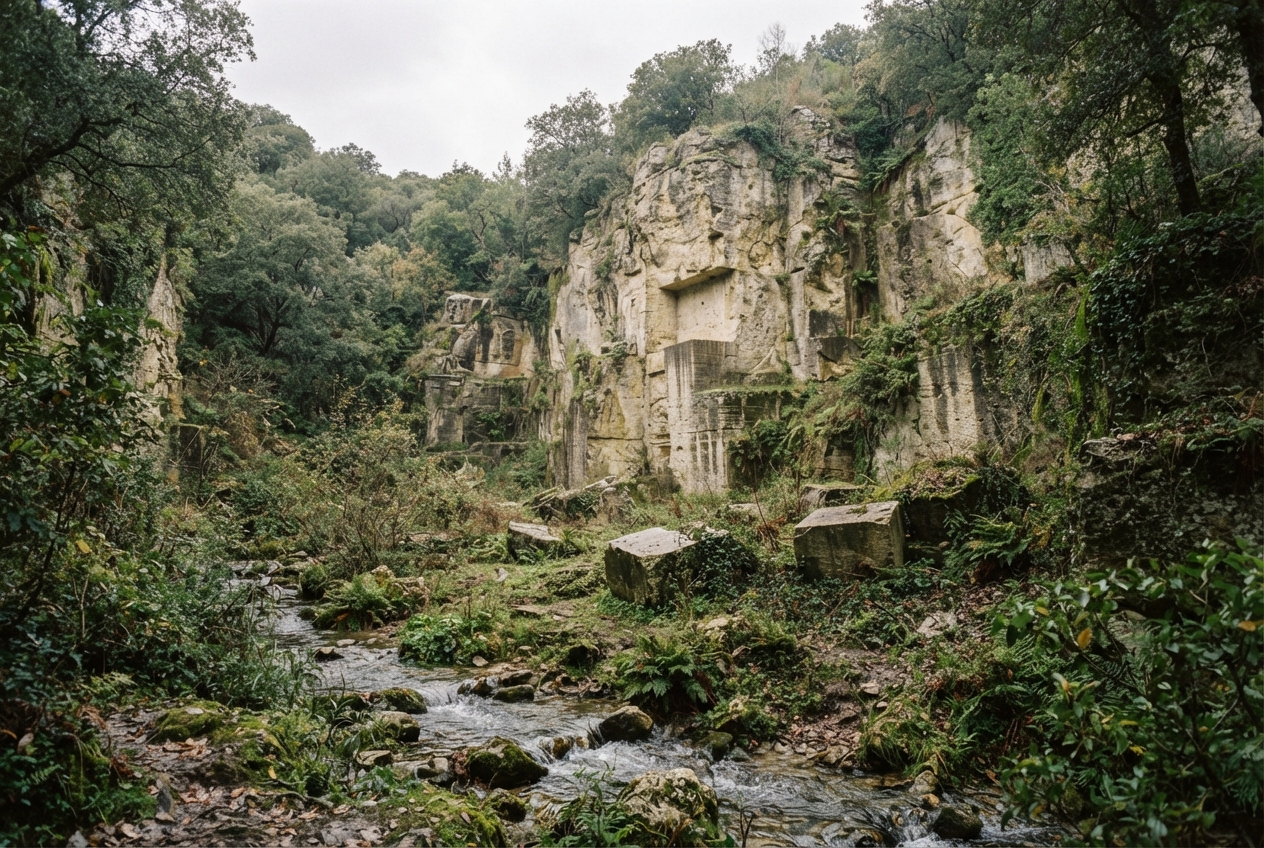
Under the grass on the south side of the creek is volcanic tuff, ash laid down and cemented long before the valley took its present shape. It cuts cleanly and rings when struck, which is why it was quarried for building stone a century ago. The quarry is quiet now, but the rock is the reason a railway once bothered to stop here.
Seasons
Summer mornings come in grey with marine fog that burns off by ten. Autumn is dry, gold and still, with the first rains usually in November. Winter greens the hills within weeks; spring brings lupine and poppies to the road banks, swifts over the creek, and the watercress at its best. By June the grass has cured back to gold and the cycle starts again.